Thursday, March 30, 2017

Building a Better Tomato


Blossom end rot is common problem in tomatoes, but it can be found in other vegetables like peppers, cucumbers and eggplants.  Developing fruit have a calcium deficiency in the tissue which appears as a soft dark spot on the end of the fruit.  The problem is easy to prevent, but hard to cure.  Calcium is not readily available in soil with a low pH and adding dolomite lime will raise the pH and add calcium. Removing crops from the garden can deplete the soil of calcium and other elements. Potting soil has little if any calcium.  Young plants can absorb calcium better than older plants, so it is best to add calcium at planting time. If your pH is good, you can add Gypsum to your soil instead of lime. Gypsum is a natural mineral form of Calcium sulfate.  I recommend, when planting vegetables in the garden, mix 2-3 tablespoons of gypsum in the planting hole.  For potted plants, add about ¼ cup of gypsum to 3-5 gallons of potting soil.  Keep in mind that Calcium and other minerals are moved through plants with water and drought stress will also cause blossom end rot.  #blossomendrot


Gypsum is like duct tape for gardeners – it can fix a number of problems in the garden cheaply.
Gypsum also adds essential mineral sulfur along with calcium to the soil. Adding Gypsum will not change the soil pH.
In heavy clay soils, adding gypsum will loosen the clay and improve drainage.
Gypsum will displace salt and will help heal problems caused by pet urine in lawns. Just sprinkle about 1 cup around the affected area and water it in.
In garden ponds, gypsum can help settle clay and dirt particles, making the water clearer.
Gypsum will displace salts and will save a landscape when seawater washes over during a storm. 

In case you were wondering, gypsum is used in construction to make plaster.  The ancient Egyptians used gypsum to cover the walls inside the pyramids.  However wasn’t till 1769 that a German scientist, Johann Friedrich Mayer, discovered that gypsum made a great fertilizer. #gypsum

Shrimp and Crab Meal are great sources of natural calcium too; they also have Nitrogen, phosphorus and other trace elements.  Crab (4-3-0) Shrimp (6-6-0)

Magnesium sulfate, commonly known as Epsom Salt, Add a table spoon of this at planting and again every spring.  Magnesium is important for chlorophyll production. Plant proteins are made with Sulfur. Epsom Salt Foliage spray 2 tablespoons per gallon or 1lb. per 1000 sq feet
I don’t think I can say enough about adding Mushroom Compost  to any garden soil  Getting compost in the ground before you plant will be more beneficial than trying to add some later. Also adding a truck load of compost will raise your bed and improve drainage

Friday, December 30, 2016

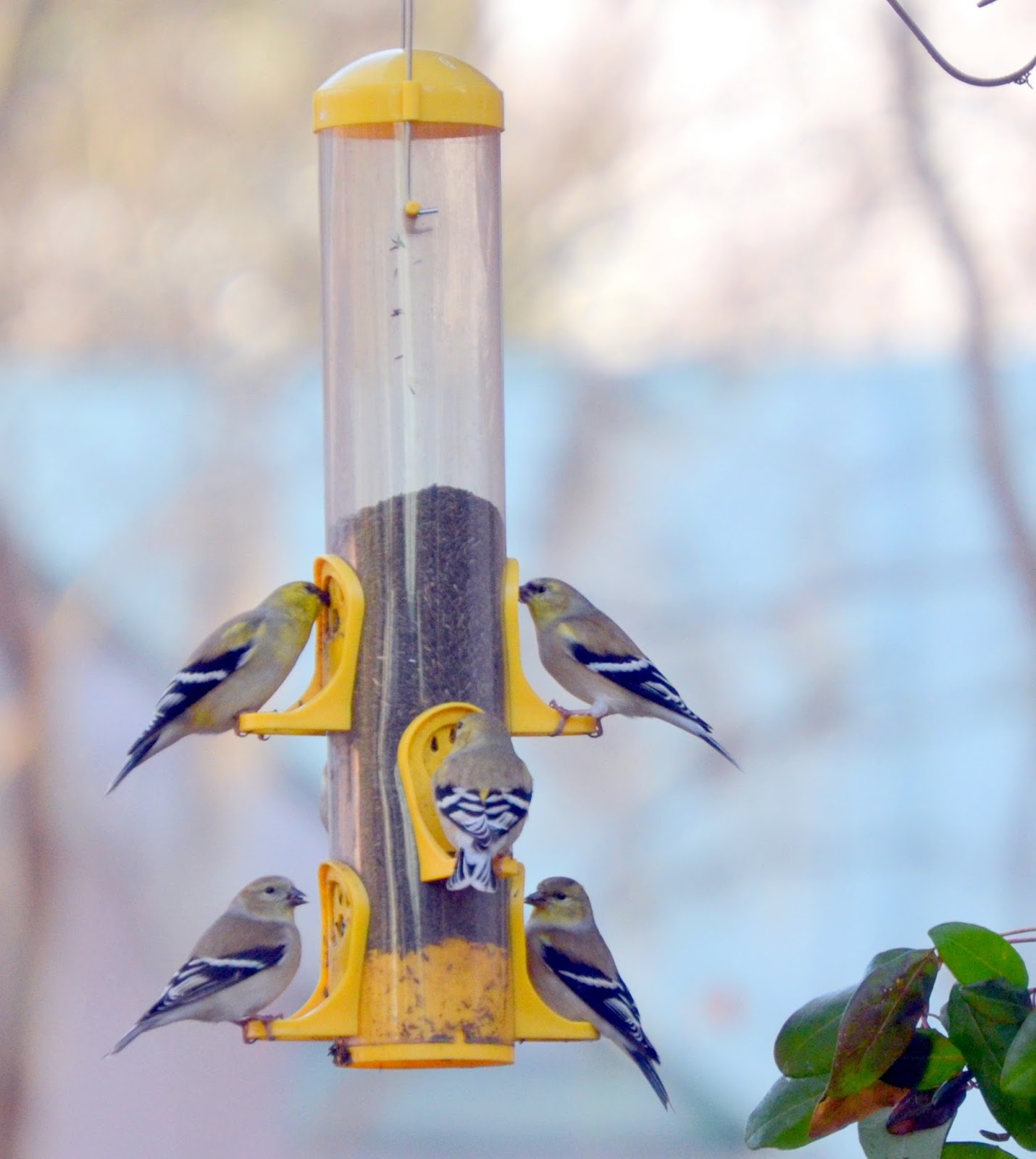
All that Glitters are not Goldfinches


A friend of mine had a flock of small birds at her feeders that she could not identify. She had looked in books but the dull yellowish grey birds were a mystery. I asked her could they be Pine Warblers or Yellow-rumped Warblers and she said  “No they did not look like any of those birds.”  It dawned on me that she had a flock of Goldfinches at her feeders but the small bird field guide she had only showed birds in their summer plumage.  Many birds have such different seasonal plumages that they look like completely different birds.  It is important to purchase a bird field guide or smart phone app that has all a bird’s plumages. Some smart phone apps also come with bird songs and calls and this feature can help correctly identify some birds.  The flight call of the American Goldfinch sounds like they are chirping “potato chip, potato chip, potato chip”. While most birds fly in beautifully synchronized flocks, a goldfinch flock looks like chaos.  A goldfinches flight pattern looks they are on a roller coaster, as one bird swoops up another swoops down.  I have often wondered why they don’t collide.
Like other finches, the goldfinch has a short conical bill that is ideal for opening and consuming seeds.  At the feeder, they can quickly clean you out.  They prefer oil sunflower and nyjer seeds at the feeders and will eat on the feeders or on the ground.  In the wild, they seek out seeds of any member of the aster family with thistle and dandelion being some of their favorites. They also eat grass and other weed seeds. Unlike other song birds which consume some insects, the goldfinch has a pure vegetarian diet.
Goldfinches live in central Virginia year round. They change their plumage twice a year.  In late summer, they transform from sunny yellow to dull little birds.  In the late winter, they shed their dull winter feathers for bold summer colors.
Goldfinches are our smallest finch; they are about the size of a chickadee. They are often seen feeding with House finches in the winter.   Keep your feeders full this winter and when spring comes, maybe you will be able to see them change into their colorful summer feathers.


Thursday, June 16, 2016

Hydrangea - Flower of Many Colors

Hydrangeas are to summer what Azaleas are to spring: a dramatic punch of color in the landscape. In older neighborhoods, large shrubs of mophead Hydrangeas dominate the garden with billowing blue flowers signaling the start of summer. Blue is a rare color for flowers and will get plenty of attention; stealing the show from other flowers.  But not all Hydrangeas are blue. White, pink and purple mopheads can also be found along with Lacecaps, Oakleaf, Peegees and Arborescens.  Lacecaps and mopheads are closely related. Botancally they are Hydrangea macrophylla and native to Japan. The color of the flower depends on the pH of the soil. Most of the Hydrangeas around here are blue because the soil is slightly acid. Adding lime in the fall will turn the flowers pink the following summer. If you want to have fun with your hydrangeas, sprinkle a hand full of Lime on one side of the bush and a hand full of Aluminum Sulfate on the other side. When the Hydrangea blooms you will have pink, purple and blue flowers. This trick will not work with white mop heads but they will blush with pink hues as the flowers fade. Hydrangeas age gracefully turning mauve, slate and chartreuse and other antique shades providing weeks of changing colors.
 Hydrangeas are great cut flowers and are a favorite of June brides and Church Flower Guilds. Just cut a handful of blooms, remove the lower leaves, and stick them in a vase for an easy flower arrangement. 
If you are trying to grow more native plants then Oakleaf and Arborescens Hydrangeas are for you. Both were traditionally white but now a few pinks are on the market. Pinky Winky Oakleaf starts out white and turns pink as the flower ages. Oakleafs need really good drainage, plenty of sun and room to grow. They often get 12 feet tall. The orange fall leaf color is a bonus.
The cultivated Arborescens Hydrangeas have huge white mopheads and often need staking. The wild forms look more like Lacecaps with smaller flowers. ‘Annabell’ is one of the most popular cultivars but new pink cultivars have hit the market in recent years. Plant them in morning sun or dappled shade.
Pruning Hydrangeas can be a little tricky, but the old garden rule “Prune after the bloom” holds true for Hydrangea macrophylla both mopheads and lacecaps. Flower buds for next year form in the summer. Flower buds are easy to identify –big and fat compared to leaf buds. So when you prune, cut just above a fat bud.   But all hydrangeas can go for years without pruning. I only prune them when I cut them for flower arrangements. Peegee and Arborescen Hydrangeas bloom on new wood and can be pruned in the winter without loss of bloom. Peegees and Oakleafs can be trained up like a small tree.  

When purchasing Hydrangeas look for repeat bloomers and new color combinations to try in your garden.
#Hydrangea #flowers #gardens